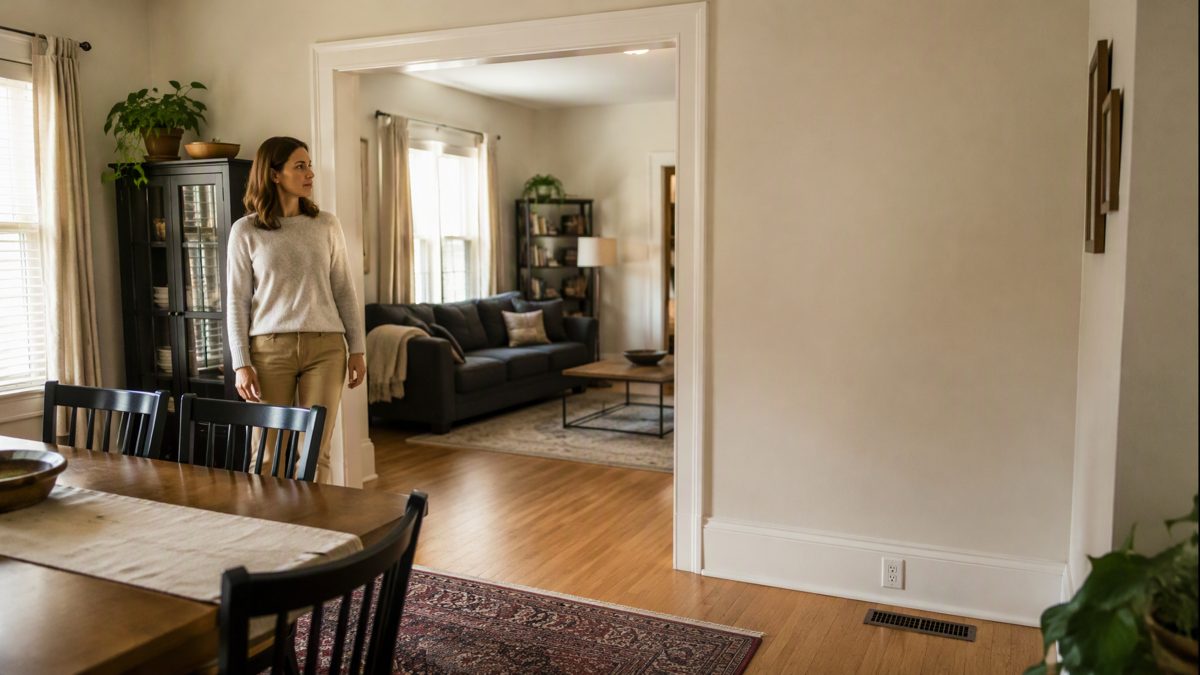
If you are the personal representative for a Bullhead City home, call us and we will walk through what you need.
You may have an attorney, a court date and a house to deal with all at once. Tell us the address and what the attorney has asked for, and we will say whether an appraisal fits and what to bring to the first call. For background: when a Bullhead City homeowner passes away and an estate is opened, the personal representative lists the house at what it was worth on the date of passing. Arizona does not require an appraiser, and the estate's attorney can tell you whether one helps.
Request a quote for a Bullhead City probate appraisal · Call (928) 833-9255
Does Arizona probate require a home appraisal?
No Arizona statute requires one. What the law does require is an inventory. Within 90 days of being appointed, the personal representative must prepare one, giving for each item of the owner's property its fair market value on the date of passing, whether it is community or separate property, and the type and amount of any encumbrance, such as a mortgage (A.R.S. § 14-3706).
Section 14-3707 then makes outside help optional: the representative "may employ a qualified and disinterested appraiser" for an asset whose worth is open to reasonable doubt, and the inventory must show each appraiser's name and address next to the items appraised. If a listed value later proves wrong or misleading, § 14-3708 calls for a supplementary inventory or appraisement, again showing market value as of the date of passing.
The inventory may be filed with the court, or not filed and instead delivered or mailed to each heir or devisee (§ 14-3706(B)); either way, interested persons can get a copy and see the number. Whether a formal appraisal would help support it is a question for the estate's attorney.
Where a Bullhead City estate is heard
The first probate proceeding belongs in the county where the owner lived when they passed away (§ 14-3201); for a Bullhead City resident, that is Mohave County. The Mohave County Superior Court's probate page says most cases there proceed as informal probate unless the estate is large or the heirs disagree, and that property passing by joint tenancy, community property or a trust may need no probate case at all. The county's Clerk of Superior Court also serves as Probate Registrar.
Smaller estates use the assessor's figure
Some estates never reach an inventory. Under § 14-3971(E), a person claiming as successor may file a real property affidavit no sooner than six months after the passing, when no personal representative has been appointed and the owner's Arizona real property, less liens and encumbrances, does not exceed $300,000. That value is the full cash value on the assessment rolls for the year of passing, set here by the Mohave County Assessor, not an appraisal. Other conditions apply, including that no federal estate tax is due; your attorney can say whether the affidavit fits.
What a date-of-passing value hinges on
Which date
For the inventory, the date is the date of passing. Selling the house later, buying out an heir or distributing the property can raise a different question, so settle the effective date before the work begins.
The house's physical state that day
Estate houses are often cleared out, repaired or updated before they sell. For a date-of-passing value, the condition that counts is the one on that day, and dated photos and records help establish it.
Community or separate
The inventory labels each item community or separate. The personal representative and the attorney decide that label, and it also bears on a surviving spouse's federal basis, as our IRS step-up page explains.
Working backward to the day the owner passed away
Work dated to the past is called a retrospective appraisal. The appraiser works from the sales and market conditions of the weeks and months around the passing, not from today's prices, and separates the home's condition at that time from later work. A home on the river, a house on the higher ground east of it and a manufactured home on a small lot each call for different comparable sales.
Public records give the starting facts: the parcel and its tax-roll value through the Mohave County Assessor's Office, and recorded deeds and mortgages through the Mohave County Recorder. A tax-roll value or a recorded price is something to examine, not a probate appraisal.
The statute's date is the date of passing. If a form or instruction you were given points to a different date, ask the estate's attorney which date the inventory should carry before you order a report.
Tax use: a question for your adviser
Arizona imposes no estate tax for deaths after 2004 and no inheritance or gift tax, according to the Arizona Department of Revenue. There is no federal inheritance tax; the federal estate tax, a tax on the estate itself, reaches only estates above the year's filing threshold. For heirs, the general IRS rule fixes basis at fair market value as of the day of passing; a different, alternate valuation date comes in only when the executor elects it on a filed Form 706 (see the IRS answer on inherited-property basis). Your attorney or tax adviser should confirm what is filed and which date to value; no appraisal can guarantee the tax outcome.
Records worth gathering first
| Bring or describe | Why it matters |
|---|---|
| Street address, Mohave County parcel number and property type | Identifies the home and the sales to research |
| The date of passing, and the date the representative was appointed | Fixes the effective date and shows how much of the 90-day inventory window remains |
| The attorney's instructions on purpose and users | Decides what the report must contain |
| How the house stood at the passing, and what has changed since | Keeps the date-of-passing condition apart from later work |
| Who can open the house, and by when | Makes it possible to plan the inspection and the delivery |
From your first call to a finished report
- Agree the scope. Give us the property, the effective date, the report's readers and your deadline; scope, fee and delivery are confirmed before work starts.
- Document the property. Arrange entry where needed and share what you know about the home at the passing and since.
- Analyze and reconcile. The appraiser weighs sales from the period around the effective date and explains the reasoning behind the value.
- Read the report closely. Check the effective date, the use and the users the report names, and its assumptions; send any factual corrections to the appraiser.
Appraisals are developed under USPAP, the Uniform Standards of Professional Appraisal Practice, which governs how the work is done but does not promise that a court, an agency or an heir will accept a report.
Timing the appraisal around the inventory
The 90-day inventory clock is the usual pressure point. Ask for a written scope, fee and delivery estimate in good time; Rule 50 of the Arizona Rules of Probate Procedure counts those 90 days from the date letters of appointment are first issued, unless the court orders otherwise. A historical effective date, the property and access also affect fee and schedule. For an inherited home outside probate, see the estate appraisal page; every service is on the services page.
Open with the property and the day of passing
Send the Bullhead City address, the date the value must describe and a list of the report's readers; we will then go through the next steps with you.
Request a quote for a Bullhead City probate appraisal · Call (928) 833-9255